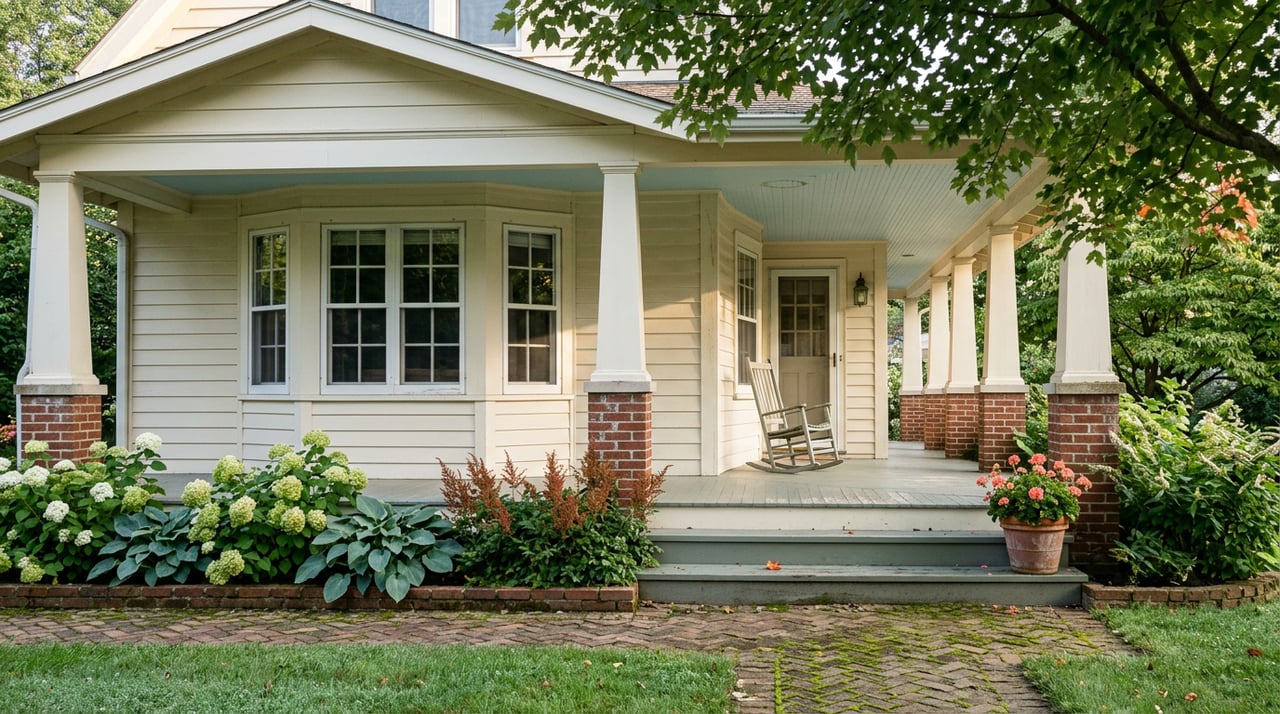
Lewisburg Housing Market and Bucknell Rentals Explained
August 13, 2026
August 13, 2026
Ask most relocation buyers why a small borough attached to a private university has a rental rate north of three in four homes, and you'll get the same answer every time: students. Too many students, too much turnover, too little owner occupancy to feel like a real neighborhood.
The number is right. The reason is not.
Lewisburg looks, on paper, like it should be swimming in student renters. Bucknell University sits on the edge of a borough that covers just 0.97 square miles and holds 5,253 residents. Census data cited by the borough puts the owner-occupied housing rate at 37.5%, with a median gross rent of $941 a month. A separate look at the local housing stock finds that roughly 78% of Lewisburg's dwellings are rentals rather than owner-occupied homes. For a buyer used to reading a market by its median price alone, that combination reads as one story: a college town where investors have crowded out families.
Bucknell's own enrollment numbers complicate that story almost immediately.
Bucknell enrolls roughly 3,928 undergraduates and 47 graduate students. That's not a small number for a borough this size. But 87% of undergraduates live on campus, not off it. The university does not let most students loose on the local rental market at all.
The off-campus population that exists is smaller and more tightly managed than outsiders assume:
Bucknell caps the number of rising seniors approved to live off campus each year, and the window to apply for that approval doesn't open until late September or early October. The renter pool near campus is smaller and more calendar-bound than the reputation of a college town suggests.
That is the piece a median price never shows you. The demand pressure from Bucknell is real, but it's rationed. It arrives on a schedule the university controls, not a flood that shows up whenever enrollment ticks up.
If it isn't an unrestricted wave of student renters, what explains a borough where owner occupancy sits under 40%?
Two structural facts do most of the work. First, Lewisburg is physically small. A borough under one square mile has a hard ceiling on how much new housing it can add, which means every existing structure carries outsized weight in the market's composition. Second, the housing stock is old. More than half of it, 54.02% by one housing analysis, was built before 1939. Homes of that vintage in a walkable, historic downtown are exactly the kind of properties that convert well to rentals: multiple bedrooms, older bones, proximity to campus and Market Street, and enough character to support a premium nightly or monthly rate once licensed.
Put those two facts together and the picture sharpens. It isn't that Bucknell floods Lewisburg with renters. It's that a fixed, aging housing stock in a very small footprint gets pulled toward rental use by owners who can convert an older four-bedroom into a licensed rental more easily than a buyer can find a comparable owner-occupant home to compete for. The renter share is a supply story wearing a demand costume.
This matters for anyone shopping in Lewisburg for reasons that have nothing to do with Bucknell at all. If the home you're touring is an older multi-bedroom property close to downtown or campus, you may be competing against a buyer who isn't calculating a mortgage payment. They're calculating rental yield against a median gross rent of $941, layered with the borough's licensing requirements and the reality that off-campus demand, while capped, is dependable every fall.
That competition looks different once you step slightly outside the compact borough core, where the housing stock skews newer, family buyers face fewer investor bids, and the calculus is closer to a conventional purchase.
The broader county market gives useful context for how quickly this is moving. Over the three months ending April 2026, Union County's median sale price ran $337,000, up 13.3% compared to the same period a year earlier, with homes selling in about 41 days on average versus 68 days the year before. A separate trailing 12-month look at the county puts the median closer to $315,000, with prices ranging from $59,255 to $2,499,900 across the full spread of inventory, and Lewisburg itself carrying the highest number of active listings of any city in the county. Those two price figures aren't in conflict. One is a tighter, more recent three-month window; the other is a full year. Read together, they show a market that has accelerated meaningfully in recent months rather than simply drifted upward.
None of that acceleration traces back to a sudden change in Bucknell's enrollment or housing policy. It traces back to the same structural scarcity that shapes the rental share: not enough new supply in a borough that can't easily expand, meeting buyers who are competing with investors for a specific, older slice of the housing stock.
If you own one of Lewisburg's older multi-bedroom homes, this same mechanism works in your favor, with one caveat. The property may draw interest from both a family buyer and an investor calculating rental economics, which widens your buyer pool. But if you plan to continue renting the home yourself after any transition, or if a buyer intends to, the borough's short-term rental licensing requirement applies per unit, with its own inspection fee, and Bucknell's policy of not vetting off-campus housing means any code compliance responsibility sits with the owner, not the university.
Selling a property that has operated as an off-campus rental means being ready to speak clearly to both kinds of buyers: the one who sees a home, and the one who sees a yield.
Does Bucknell let any student who wants to live off campus do so? No. The university caps off-campus approval to a limited number of rising seniors each year, and 87% of undergraduates live on campus. The application window for the following academic year opens in late September or early October.
Do I need a special license to rent out a home in Lewisburg? If you're operating it as a short-term rental, yes. The borough's ordinance requires a separate license for each unit, prohibits advertising or renting without one, and sets the license and inspection fee at $80 per dwelling or rooming unit.
Why are Lewisburg-area homes selling faster now than a year ago? Union County homes sold in about 41 days over the three months ending April 2026, compared to 68 days over the same period the year before. That pace reflects tightening supply against buyers competing for a housing stock that is old, geographically constrained, and increasingly attractive to both owner-occupants and rental investors.
If you're weighing a move into Lewisburg, or trying to make sense of why one listing draws five offers while a similar one down the street sits quietly, the difference usually isn't the school. It's the house, its age, and who else is doing the math on it. Teresa Keeley has spent more than 20 years reading those differences street by street in Lewisburg and the surrounding Central Susquehanna Valley. Schedule a consultation to talk through what a specific property, and its likely competition, actually looks like.
Teresa delivers a refined and highly personalized approach to Pennsylvania real estate. Her commitment to exceptional service and meaningful relationships creates a seamless experience from start to finish. Discover the difference trusted representation can make.
23 North Derr Dr Ste 28 Lewisburg, PA 17837