What The National Register Doesn't Tell You About Buying In Historic Lewisburg
September 3, 2026
September 3, 2026
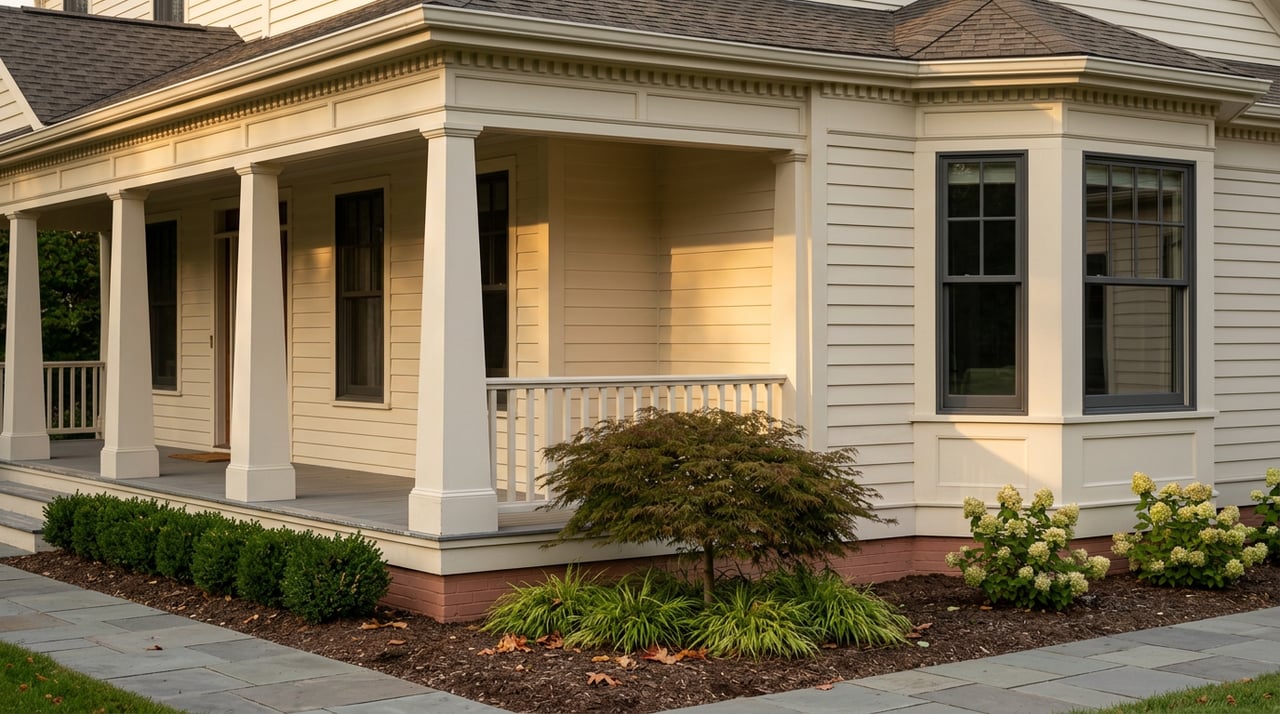
A buyer touring an 1880s Italianate on Market Street last spring picked out the porch color before she'd made an offer. Soft sage, to match the ironwork. She assumed that once she closed, the paint would be hers to choose. It wasn't. Not because anyone was being difficult, but because the house sits inside Historic Lewisburg, and inside that boundary, exterior color is a decision the borough gets to weigh in on before you touch a brush to it.
That surprise is the thing most guides to buying in a historic district skip over. They tell you the house is old, the details are original, the neighborhood is protected. They don't tell you who is doing the protecting, or that the answer changes depending on which map you're looking at.
Lewisburg's Historic District was added to the National Register of Historic Places in 2004, a designation that covers 853 contributing buildings along with two contributing sites, eleven contributing structures, and two contributing objects, stretching through the borough's central business district and the residential blocks around it. Names on that list read like a walking tour: the Derr House, built in 1773, Bucknell University buildings including Old Main and Bucknell Hall, the 1856 Union County Courthouse, the 1902 Himmelreich Library, the 1899 Union National Bank, the 1913 McClure Building, and the Buffalo Mills, dating to 1883.
What the National Register listing does not do, on its own, is require you to ask anyone's permission to replace a window. That authority comes from a separate piece of local law. Lewisburg Borough's own ordinance, Chapter 186, created a Historical Architectural Review Board back in 1985 with a specific job: advise Borough Council on whether exterior work inside Historic Lewisburg gets a Certificate of Appropriateness. The borough's Zoning Officer is not permitted to issue a building permit for erection, reconstruction, alteration, restoration, demolition, or razing inside the district until Council has issued that certificate. The board itself meets monthly and, after each meeting, has 30 days to send Council its written recommendation.
That's the part a buyer needs to internalize before falling for a porch or a widow's walk. The house being on a federal list is a historical fact. The permit requirement is a local one, and it's the local one that will slow down your renovation timeline.
The ordinance draws the line at anything visible from the street. Paint color, window replacement, roofing, siding, additions, new construction on the lot, even demolition of an outbuilding all fall under Certificate of Appropriateness review if they change how the building reads from the public way. There is a carve-out worth knowing: routine maintenance and repair that restores a feature to its prior condition, without requiring a building permit in the first place, doesn't need board review. Patching a section of the same clapboard you already have is different, legally, from swapping it for vinyl. The ordinance also allows emergency work when a structure has been declared unsafe, so storm damage or a collapsing porch roof isn't held hostage to a monthly meeting schedule.
For a buyer, the practical takeaway is timing. If your plan is to close on a Market Street rowhouse in October and have new windows in by winter, build in the Certificate of Appropriateness step as its own line item, not an afterthought squeezed between closing and move-in.
Here's the wrinkle that doesn't show up in a listing description. Chapter 186, the ordinance that actually creates the permit requirement, dates to 1985 and originally defined Historic Lewisburg with its own boundary description, drawn nearly two decades before the National Register listing existed. When the borough rewrote its zoning code in 2011, it tied the Historic District overlay to whatever boundary the National Register recognizes. Two different legal documents, drawn at two different times, describing what should be the same neighborhood.
They didn't line up perfectly. In 2014, the Historical Architectural Review Board partnered with the Lewisburg Neighborhoods Corporation to hold a public session specifically to walk residents through what the borough called the reconciled historic district map. The borough was explicit about the problem: there were currently two maps of the historic district, one from the federal designation and one from the local ordinance, and the goal was to fold the state-defined boundary into the local ordinance as the new official map.
| What it establishes | Who enforces it | |
|---|---|---|
| National Register listing (2004) | Historical recognition, eligibility for certain preservation programs | National Park Service, honorary at the property level |
| Local ordinance, Chapter 186 (1985) and Chapter 360 (2011) | The actual Certificate of Appropriateness requirement for exterior work | Lewisburg Borough Council, advised by HARB |
The lesson for anyone buying inside or near the district today isn't that the boundaries are still in dispute. It's that the two systems were built independently, at different times, for different purposes, and a property's status under one doesn't automatically tell you its status under the other. A parcel search on a national historic registry database is a reasonable starting point. It is not a substitute for asking Lewisburg Borough directly whether your specific address falls inside the boundary the Zoning Officer actually uses to require a permit.
Before you fall for a house because of its ironwork or its transom windows, ask the borough's zoning office, not just a listing agent, whether the parcel sits inside the ordinance boundary for Historic Lewisburg. If it does, treat any planned exterior work the way you'd treat a septic inspection: as a step in the timeline, not a footnote. Ask the seller whether any exterior changes made during their ownership went through the Certificate of Appropriateness process, and if there's a project you're already dreaming about, whether they ever brought a similar request to the board and what they were told.
If you're relocating from a market without this kind of review, the adjustment isn't really about restriction. It's about sequencing. A remodel that would take four weeks in a newer subdivision takes longer here because a monthly board meeting and a 30-day report window are baked into the process.
If your home sits inside the district and you've made exterior changes over the years, gather whatever Certificate of Appropriateness paperwork you have before you list. Buyers who've done their homework will ask, and a folder of approved certificates does more to build confidence than a verbal assurance that everything was fine. If you have a project you've been meaning to get to, a new roof, a repainted trim color, getting it in front of the board before you list means the next owner inherits a decision already made instead of one still pending.
Presentation matters here in a way that's specific to historic property. A buyer touring a well-kept home inside Historic Lewisburg isn't just evaluating square footage. They're evaluating whether the exterior has been maintained in a way that will hold up to board scrutiny down the line, because eventually they'll be the one filing the application.
Does interior renovation need board approval? No. The ordinance is specific to exterior work visible from a public way. A kitchen remodel or finished basement doesn't trigger review unless it changes something visible from the street.
Is every old house in Lewisburg inside the ordinance boundary? Not necessarily, and that's exactly the point. Age and character don't determine jurisdiction. Only the borough's own map does, and confirming it directly avoids relying on a national database that wasn't drawn for this purpose.
What happens if exterior work was done without a certificate? The ordinance requires an application before a permit is issued, which means non-compliant work can surface as a problem during a later sale or renovation, not just an immediate one. It's a good reason for sellers to resolve open questions before listing rather than after an offer is already in.
Buying inside Historic Lewisburg isn't a reason to walk away from a house you love. It's a reason to ask better questions earlier, from someone who knows which office actually has the map that matters.
If you're weighing a historic property in Lewisburg, or getting one ready to list, Teresa M Keeley can walk you through what the district actually requires before you write an offer or set a listing date. Schedule a consultation to talk through the details specific to your address.
Teresa delivers a refined and highly personalized approach to Pennsylvania real estate. Her commitment to exceptional service and meaningful relationships creates a seamless experience from start to finish. Discover the difference trusted representation can make.
23 North Derr Dr Ste 28 Lewisburg, PA 17837